
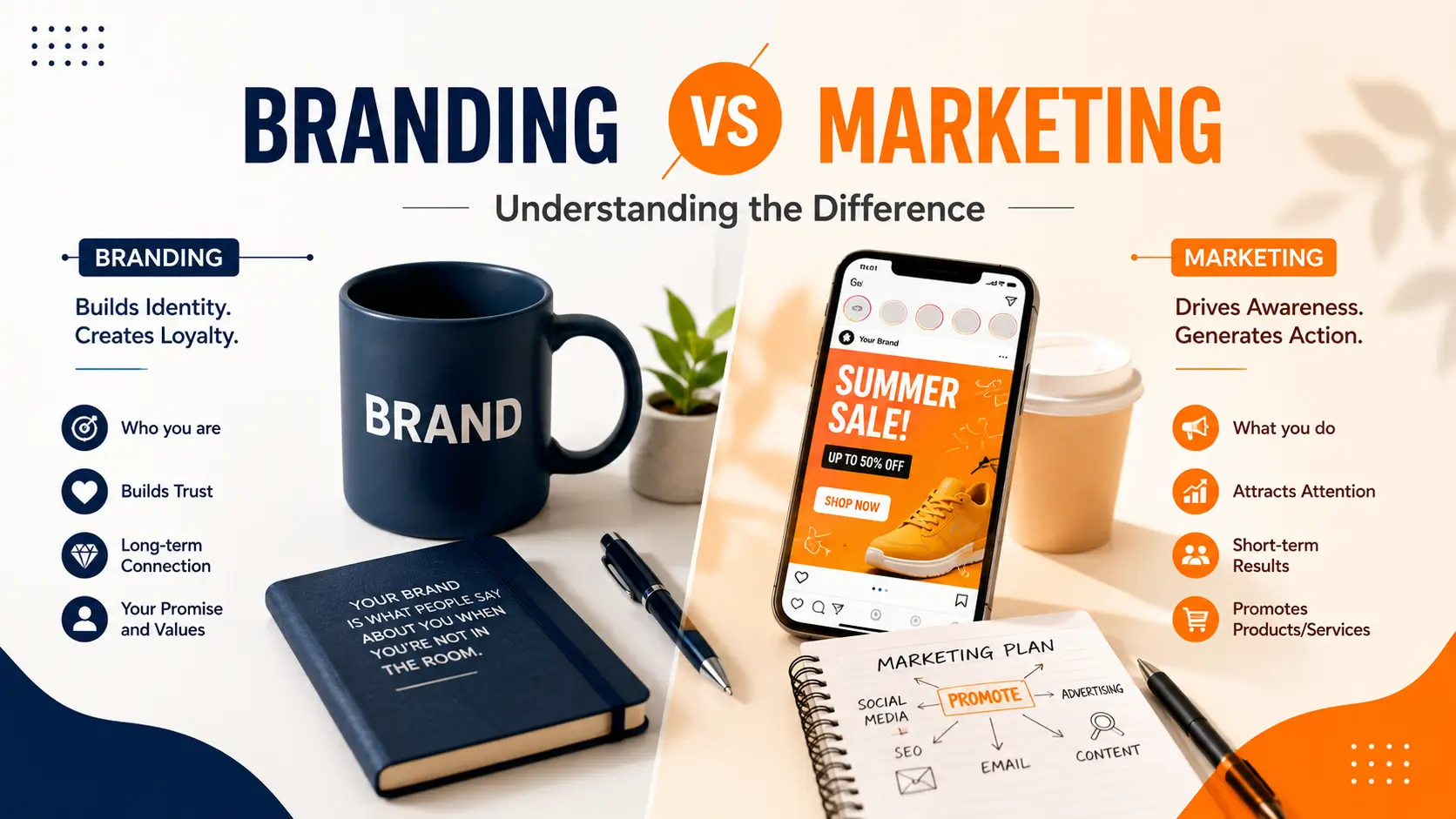
If you run a business, you have likely heard the terms branding and marketing used interchangeably. People often group them together as if they are the exact same concept. You might hear someone say they need to work on their marketing when they are actually talking about changing their logo. You might also hear someone talk about their brand when they are actually referring to a paid advertisement campaign.
Table of Contents
Confusing these two concepts is a common mistake. However, treating them as the same thing can hurt your growth strategies. While they work together to build your business, they serve entirely different purposes.
Understanding the clear distinction between branding and marketing helps you allocate your budget wisely, target the right audience, and build a sustainable business. At Rife Media Solutions, we help companies navigate these exact strategies so they can build long term authority while driving immediate revenue.
In this guide, you will learn what branding and marketing actually mean, how they differ, why you need both, and how to combine them for maximum business growth.
What is Branding?
Branding is the practice of shaping how people perceive your business. It is the core identity of your business. It includes your values, your mission, your visual identity, your tone of voice, and the emotional connection you create with your audience.
When you focus on branding, you are answering fundamental questions about your business:
- Who are you as a company?
- What do you stand for?
- Why do you exist beyond making a profit?
- How do you want people to feel when they interact with your business?
Branding is not active promotion. Instead, it is the underlying personality that makes your business recognizable and trustworthy. When customers decide to stay loyal to your business over a competitor, they are responding to your brand.
If you are unsure whether your business identity is clear enough, learning what is branding and why every business needs it will give you a solid foundation.
The Core Elements of Branding
To build a strong brand identity, you need several foundational elements working together:
- Brand Purpose and Mission: This is the reason your business exists and the value you aim to bring to your customers.
- Visual Identity: This includes your logo, typography, color schemes, imagery styles, and overall visual aesthetics.
- Brand Voice and Tone: This dictates how you communicate with your audience, whether you sound professional, casual, authoritative, or playful.
- Brand Values: These are the core principles that guide your business decisions and company culture.
- Customer Experience: This covers every touchpoint a customer has with your business, from navigating your website to speaking with customer support.
If your current identity feels outdated, inconsistent, or disconnected from your audience, you should review these 10 signs your business needs a rebrand.
What is Marketing?
Marketing is the set of actions, tools, and tactical strategies you use to promote your products or services. If branding defines who you are, marketing is how you communicate that message to drive actions like sales, signups, or inquiries.
Marketing is active, direct, and focused on driving specific results. It involves research, campaign planning, channel selection, execution, and analytical tracking.
When you run a promotional campaign, launch a new product, or create a social media strategy, you are engaging in marketing.
Key Components of Marketing
Marketing spans across multiple tactical execution methods, including:
- Digital Strategies: Utilizing tools like search engines and websites to drive traffic and sales.
- Content Creation: Educating and engaging your audience through written articles, graphics, and infographics.
- Social Engagement: Reaching target demographics directly on platforms where they spend their time.
- Paid Advertising: Running targeted promotional campaigns across print, television, or online channels.
- Video Production: Using motion visual assets to capture attention and demonstrate products.
Branding vs Marketing: The Key Differences
To keep the distinction simple, you can view branding as the strategy that creates customer loyalty, while marketing is the tactic that brings customers to your door in the first place. Marketing prompts a response, while branding builds a lasting relationship.
Here is a simple breakdown comparing the two:
| Characteristic | Branding | Marketing |
| Primary Focus | Defining your core identity and values | Driving sales, leads, and traffic |
| Timeline | Long term strategy that remains consistent | Short term campaigns that change frequently |
| Goal | Build loyalty, trust, and emotional connection | Encourage immediate action or conversion |
| Target Audience | Who you are as a business | Who your specific customers are for a offer |
| Pace of Change | Evolves slowly over time | Changes constantly based on trends and data |
| Measuring Success | Measured through brand awareness and retention | Measured through conversions, ROI, and sales |
1. The Functional Difference
Branding comes first. You cannot market a product or service effectively if you do not know what your business stands for. Your brand provides the rules, tone, and visual guidelines for every single marketing campaign you run.
Marketing is the vehicle used to express your brand. Without marketing, no one will discover your brand. Without branding, your marketing campaigns will look inconsistent, confuse your audience, and fail to convert interest into long term loyalty.
2. Long Term Value vs Short Term Action
Branding is a long term investment. It takes years to build a reputation, establish authority, and earn customer trust. Once established, a strong brand continues to yield results even when active promotions are turned off.
Marketing focuses on specific timelines and shorter cycles. A paid promotional push might run for two weeks, while a seasonal campaign might last a month. Marketing campaigns start, execute, and end based on performance indicators and goals.
3. Customer Perception vs Direct Engagement
Branding influences how people view your business as a whole. It sets expectations for quality, trust, and service.
Marketing interacts directly with prospect needs. It highlights features, prices, special offers, or solutions to specific problems. Marketing tells people why they need to buy right now.
The Elements of an Effective Marketing Strategy
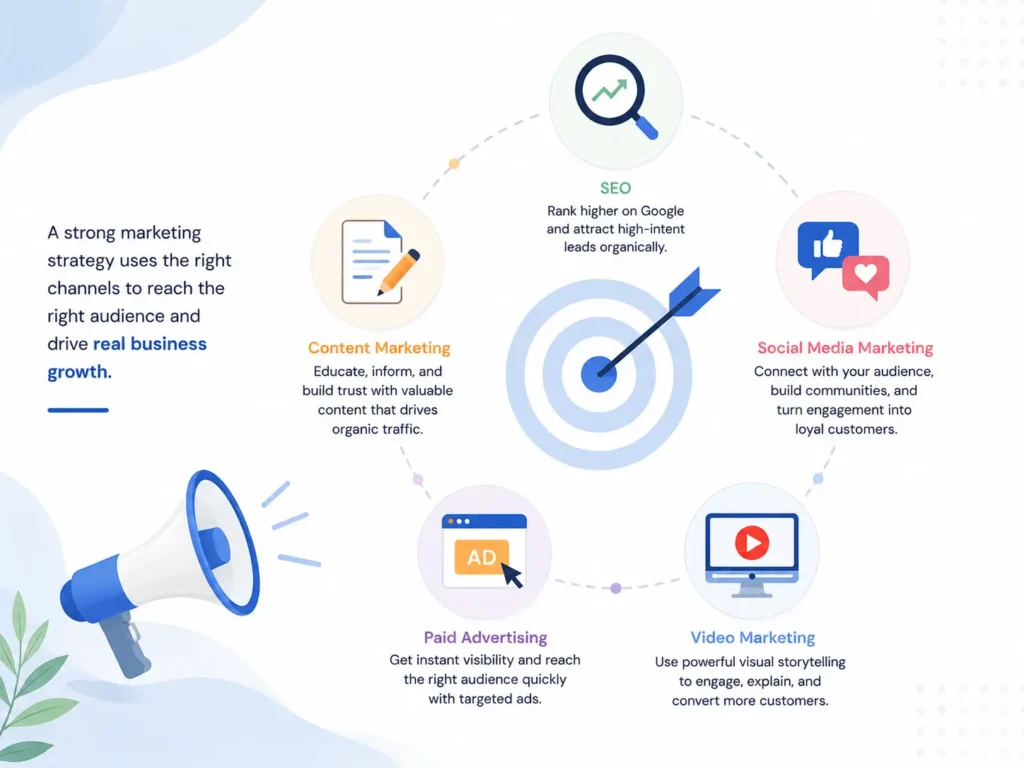
To see marketing in action, it helps to look at the specific service channels that modern businesses use to drive growth.
When you work with a professional agency like Rife Media Solutions, we blend tactical marketing executions with your overarching brand message to ensure every campaign drives real business outcomes.
Here are the primary marketing channels every modern business should evaluate:
Search Engine Optimization (SEO)
Search engines are often the first place customers look when they need a product or service. Getting your business ranked higher on Google ensures that warm leads find you at the exact moment they are looking to buy.
Investing in expert SEO (Search Engine Optimization) helps build sustainable, organic web traffic over time. If you are new to this channel, understanding what is SEO and why it matters for your business is a crucial first step in building your digital presence.
Social Media Marketing
Social media platforms allow you to place your product directly in front of highly targeted user groups. Platforms like Instagram, Facebook, and LinkedIn allow you to distribute visual content, interact with followers, and create active communities.
Through tailored Social Media Marketing, you can convert casual scrollers into engaged followers and paying customers.
Content Marketing
Publishing helpful blog posts, guides, case studies, and resources educates your prospective clients while establishing your company as an authority in your field.
By executing a consistent plan for Content Marketing, you provide genuine value to your audience, which drives organic search traffic and warms up prospective buyers.
Video Marketing
Visual storytelling is one of the fastest ways to capture attention online. High quality videos help demonstrate product features, share customer testimonials, and show the human side of your company.
Leveraging strategic Video Marketing ensures your message is easily digestible and shareable across all modern digital channels.
Paid Advertising
When you need immediate visibility and quick traffic spikes, paid ad placements offer fast execution. Whether you run Google search ads or targeted social ads, paid campaigns help you reach specific demographics quickly.
Running targeted campaigns through professional Advertising ensures your ad spend converts into measurable leads without wasting money on unqualified clicks.
How Branding and Marketing Work Together
While branding and marketing are distinct functions, they should never operate in isolation. They are two halves of the same business strategy.
Here is how they support and amplify each other:
- Branding Guides Marketing: Your brand strategy defines your target audience, tone of voice, visual standards, and value proposition. Every ad, email, blog post, or social video created during a marketing campaign must align with these brand guidelines.
- Marketing Fuels Brand Awareness: The greatest brand identity in the world is useless if nobody sees it. Marketing campaigns place your brand identity in front of real audiences across search engines, social media platforms, and ad networks.
- Branding Improves Marketing Returns: When consumers recognize and trust a brand, they are far more likely to click on an ad, open an email, or convert on a landing page. Strong branding directly lowers customer acquisition costs and increases conversion rates for your marketing campaigns.
- Marketing Validates Brand Messaging: Real time campaign data from marketing efforts gives you feedback on what resonates with your audience. You can use these insights to refine your broader brand strategy over time.
Which One Should You Focus On First?
A common problem business owners face is deciding where to invest their time and capital first.
If you spend all your money on marketing without fixing your brand, you will drive traffic to a confusing website with unclear messaging. You might get initial clicks, but visitors will not convert into long term buyers because your business lacks credibility.
On the other hand, if you invest all your resources into perfecting your brand identity, logo, and values, but spend nothing on marketing, your business will stay invisible.
The Correct Sequence for Growth
- Establish your foundational brand identity: Define your values, visual elements, brand voice, and core target audience. Utilize structured Branding services to get this right from the start.
- Build your core digital assets: Ensure your website and online channels accurately reflect your new brand identity.
- Launch targeted marketing campaigns: Use search campaigns, social media outreach, content creation, and paid ads to drive traffic to your brand.
- Refine based on data: Monitor campaign metrics, customer feedback, and sales numbers to continually optimize both your marketing execution and brand messaging.
How Rife Media Solutions Helps Your Business Grow
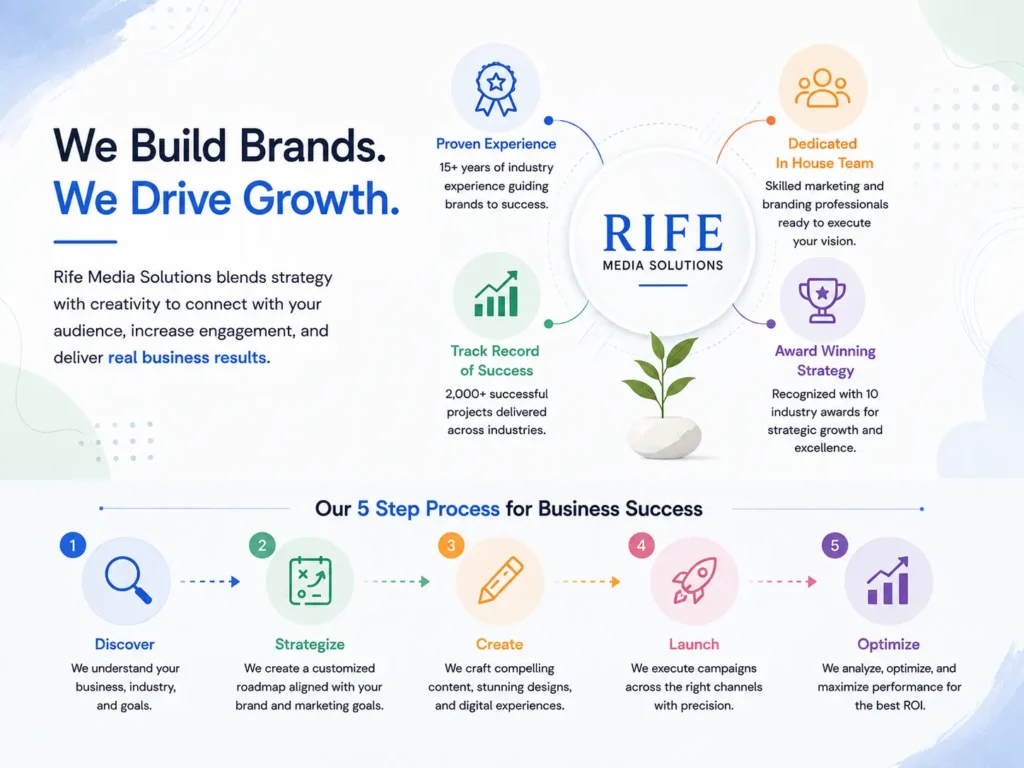
Balancing brand creation with tactical marketing execution requires experience, strategic planning, and creative talent. That is where Rife Media Solutions comes in.
Based in Surat, Gujarat, Rife Media Solutions is a creative agency blending strategy with storytelling. We build digital experiences that connect with audiences, increase engagement, and drive real business conversions. Whether you are a startup building your identity from scratch or an established company looking to scale your reach, we bring your ideas to life with purpose and technical precision.
Why Choose Rife Media Solutions?
- Proven Experience: Over 15 years of industry experience successfully guiding companies through rebrands and marketing campaigns.
- Track Record of Success: More than 2,000 successful projects delivered across various industries.
- Dedicated In House Team: A skilled team of marketing and branding professionals ready to execute your vision.
- Award Winning Strategy: Recognized with 10 industry awards for excellence in strategic growth and digital execution.
Our 5 Step Process for Business Success
We keep our process transparent, simple, and entirely focused on your business goals:
- Discover: We dive deep into your business model, study your industry competitors, and identify your target audience.
- Strategize: We build a customized roadmap that aligns your long term branding needs with short term marketing goals.
- Create: Our creative team develops stunning visual assets, compelling copy, and clean digital experiences.
- Launch: We execute your campaigns across search, social, and paid channels with total precision.
- Optimize: We track campaign performance, analyze data points, and make continuous adjustments to maximize your return on investment.
If you are looking to build a brand that stands out or scale your current promotional efforts, learning how to choose the best digital marketing agency for your business will help you make the right choice for your business growth.
Final Thoughts
Branding and marketing are not competitors within your business strategy. They are partners.
Branding defines who you are, builds trust, and creates an emotional connection with your audience. Marketing takes that identity, places it in front of the right prospective customers, and encourages them to take action. When you execute both elements with clarity and precision, your business secures predictable, sustainable growth.
If you are ready to strengthen your brand identity, launch targeted marketing campaigns, or build a modern digital presence, Rife Media Solutions is here to help. Reach out to our team today to start building a strategy that delivers real results.
1. Can you have marketing without branding?
Yes, you can run marketing campaigns without an established brand, but your promotions will produce lower conversion rates and fail to build long term customer loyalty.
2. Which is more expensive, branding or marketing?
Branding typically requires a larger upfront investment to build your initial identity, while marketing represents an ongoing operational expense that continues month after month.
3. How often should a business update its branding?
Most businesses refresh their visual elements every 5 to 7 years to keep up with industry trends, while complete rebrands are only necessary when shifting target markets or business models.
4. How do I know if my marketing campaigns are working?
You can measure marketing performance by tracking key operational metrics such as conversion rates, click through rates, lead volume, and return on ad spend.
5. How do I measure the success of my branding efforts?
Branding success is evaluated through long term indicators like brand search volume, direct website traffic, customer retention rates, and general brand sentiment.
6. How long does it take to see results from branding vs marketing?
Marketing campaigns can generate immediate traffic and leads within days of launch, whereas branding builds authority gradually over several months and years of consistent execution.